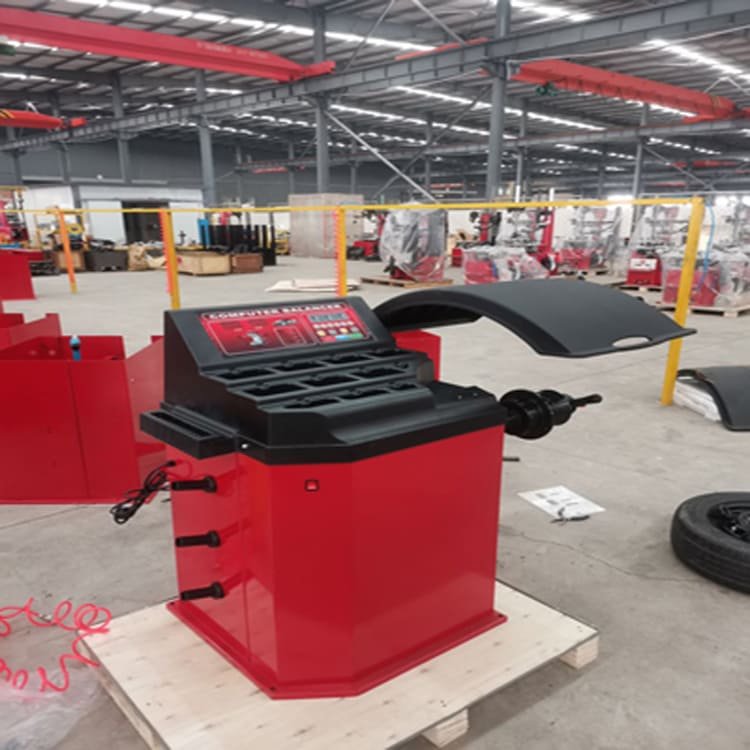
How to Choose a Wheel Balancer Machine? 2 Models Compared
Looking for a reliable wheel balancing machine for your tire shop? Compare two models featuring ±1g accuracy, fast balancing cycles, LCD displays, and wide rim compatibility. Contact us for wholesale prices
Are You Losing Time and Money Because of an Inefficient Wheel Balancer?
Imagine this:
A customer drives into your tire shop complaining about steering wheel vibration at highway speeds. Your technician mounts the wheel, runs the balancing machine, adjusts the counterweights, and performs another test.
But the result is still not satisfactory.
The customer has to wait longer, your technician spends more time troubleshooting, and other vehicles are waiting in line.
Does this sound familiar?
For tire shops, automotive repair centers, and tire service businesses, an unreliable or outdated wheel balancer can create several problems:
- Low balancing accuracy: Repeated adjustments increase labor costs and reduce customer satisfaction.
- Slow working speed: Long balancing cycles reduce the number of vehicles your workshop can service every day.
- Limited rim compatibility: Some machines cannot accommodate the different wheel sizes your customers bring in.
- Complicated operation: Difficult measurement procedures increase training time and the risk of operator errors.
- High maintenance costs: Unstable equipment can interrupt daily operations and affect your business profitability.
A professional wheel balancing machine is not simply another piece of workshop equipment. It is an investment in productivity, service quality, and long-term business growth.
So, how do you choose the right one?
Let’s compare two practical wheel balancer models designed for professional tire service applications.
Why Does Your Tire Shop Need an Accurate Wheel Balancer?
Wheel balancing corrects uneven weight distribution in the tire and wheel assembly.
When a wheel is out of balance, drivers may experience steering wheel vibration, vehicle vibration, and uneven tire wear.
These problems can affect driving comfort and increase stress on certain vehicle components.
According to Continental’s tire balancing guide, proper wheel balancing helps reduce vibration and protect tires, steering components, and suspension systems from premature wear.
For your workshop, this means that accurate balancing is essential for delivering professional tire services.
A reliable wheel balancer helps your technicians:
- Identify wheel imbalance efficiently.
- Determine the appropriate correction weight.
- Reduce unnecessary repeat adjustments.
- Improve daily service efficiency.
- Deliver a better customer experience.
If you are also upgrading your tire service equipment, explore our tire changer machines and automotive workshop equipment to build a more efficient service station.
Two Wheel Balancer Machines Worth Considering
Different workshops have different requirements.
A small tire shop may prioritize simple operation and stable performance, while a high-volume tire service center may need faster measurement cycles and wider rim compatibility.
Here are two wheel balancer models to consider.
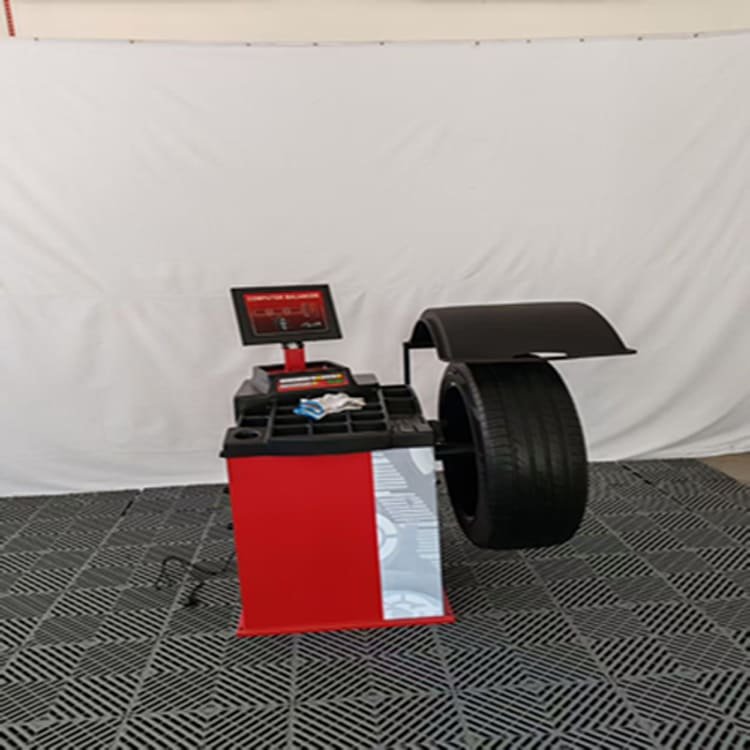
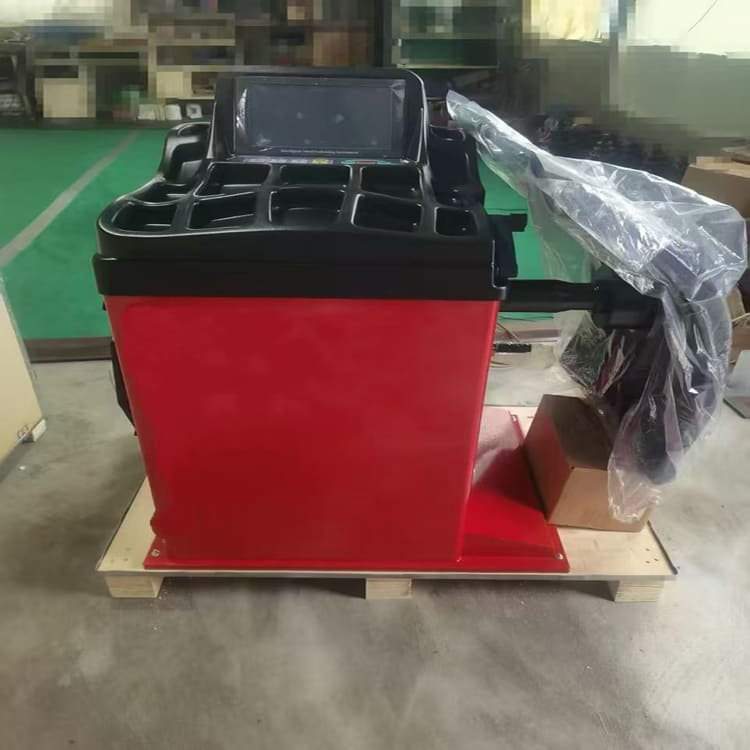
1. Standard Computer Wheel Balancer – Reliable Performance for Daily Tire Service
If you are looking for a practical wheel balancer for everyday workshop operations, this model offers a combination of accuracy, straightforward operation, and dependable specifications.
Key Features
- Rim diameter: 10″–24″
- Tire width: 15″–16″ (as specified)
- Maximum wheel weight: 70 kg
- Maximum wheel diameter: 1000 mm
- Rotation speed: 230 rpm
- Balancing accuracy: ±1 g
- Motor power: 0.25 kW
- Power supply: 220V / 50Hz
- Noise level: Less than 70 dB
- Machine weight: 130 kg
Why Should You Consider This Model?
1. ±1g Balancing Accuracy
When customers complain about vibration, balancing accuracy matters.
With a stated balancing accuracy of ±1 g, this machine is designed to support precise wheel balancing operations and help technicians achieve consistent results.
2. Computer Display for Easier Operation
The computer display provides measurement and balancing information, helping operators understand the adjustment requirements.
This makes daily operation more convenient for tire service technicians.
3. Suitable for a Range of Wheel Applications
With a stated rim diameter range of 10–24 inches and maximum wheel diameter of 1000 mm, this model can accommodate a variety of wheel applications within its specifications.
4. Stable Workshop Performance
The 0.25 kW motor and 130 kg machine weight make this a practical option for workshops looking for a dedicated wheel balancing solution.
Who Is This Model Suitable For?
- Independent tire repair shops
- Small and medium-sized auto repair workshops
- Tire service centers
- Automotive equipment distributors
If your priority is dependable daily operation without investing in unnecessary complexity, this model is worth considering.
Contact us for the latest price and product details →
2. FT-2018N Wheel Balancer – Faster Operation and Wider Rim Compatibility
Do you process a large number of wheels every day?
Do your technicians need to handle different rim sizes without constantly worrying about equipment limitations?
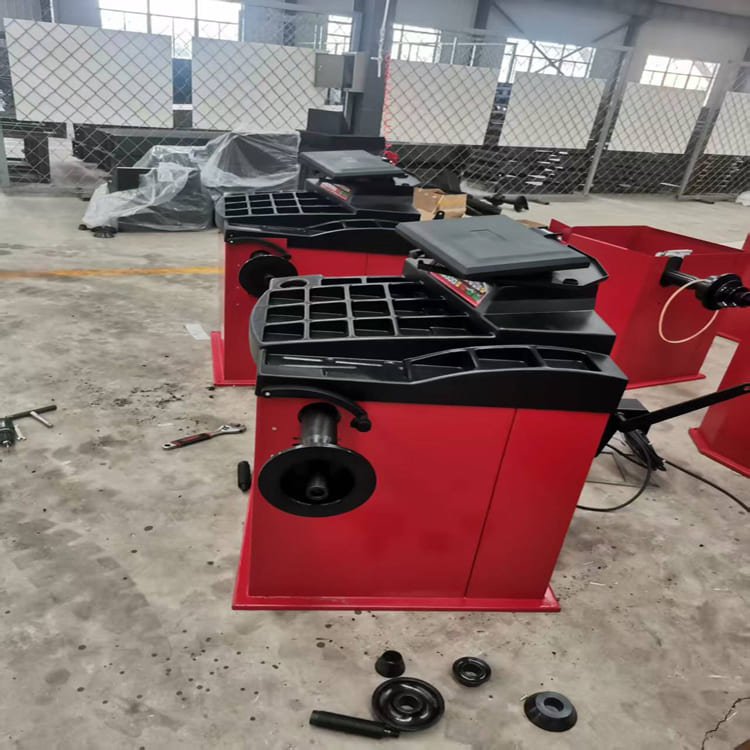
The FT-2018N wheel balancer is another option designed for workshops that value fast operation, measurement convenience, and flexibility.
Key Features
- Model: FT-2018N
- Rim diameter: 10″–26″
- Rim width: 1.5″–20″
- Maximum wheel diameter: 1000 mm
- Balancing cycle: 8 seconds
- Balancing precision: ±1 g
- Balancing speed: 260 rpm
- Power supply: 220V
- Motor power: 0.25 kW
- Packing size: 980 × 750 × 1150 mm
- Gross weight: 118 kg
- Net weight: 96 kg
What Makes the FT-2018N Different?
1. Fast 8-Second Balancing Cycle
Time is money in a busy tire shop.
The FT-2018N features an 8-second balancing cycle, helping technicians process balancing jobs efficiently.
For workshops handling multiple vehicles every day, a shorter cycle can help improve workflow.
2. Wider Rim Diameter Range
Compared with the first model’s stated 10–24-inch rim diameter range, the FT-2018N supports rims from 10 to 26 inches.
This gives your workshop more flexibility when servicing different wheel sizes.
3. Convenient Tape Measurement
One of the practical advantages of this model is its tape measurement system.
Simply pull the measuring tape, and the display shows three measurement values:
- A: Distance
- B: Rim width
- D: Rim diameter
This simplifies the measurement process and helps operators obtain the information needed for balancing.
4. Electromagnetic Brake
The FT-2018N is equipped with an electromagnetic brake, providing controlled wheel stopping during operation.
This feature makes the machine more convenient for positioning and performing balancing adjustments.
5. LCD Display Screen
The LCD display presents measurement and balancing information clearly, helping technicians follow the operating process.
Who Is This Model Suitable For?
- Professional tire shops
- Medium and high-volume automotive workshops
- Tire equipment distributors
- Automotive service equipment wholesalers
If wider rim compatibility and a fast balancing cycle are important to your business, the FT-2018N deserves your attention.
Ask us for an FT-2018N quotation →
Standard Wheel Balancer vs. FT-2018N: Which One Should You Choose?
Choosing equipment based only on price can be a costly mistake.
You should compare the technical specifications with your actual workshop requirements.
Here is a quick comparison:
| Specifications | Standard Model | FT-2018N |
|---|---|---|
| Rim diameter | 10″–24″ | 10″–26″ |
| Rim width | 15″–16″ (specified tire width) | 1.5″–20″ |
| Max. wheel diameter | 1000 mm | 1000 mm |
| Balancing accuracy | ±1 g | ±1 g |
| Rotation speed | 230 rpm | 260 rpm |
| Balancing cycle | Not specified | 8 seconds |
| Motor power | 0.25 kW | 0.25 kW |
| Display | Computer display | LCD display |
| Special feature | — | Tape measurement and electromagnetic brake |
| Machine weight | 130 kg | Net 96 kg / Gross 118 kg |
Which Model Is Better for Your Business?
Choose the standard model if you:
- Mainly service wheels within the 10–24-inch rim range.
- Need a practical machine for everyday tire balancing.
- Prefer a straightforward computer-display configuration.
Choose the FT-2018N if you:
- Need compatibility with rims up to 26 inches.
- Want an 8-second balancing cycle.
- Prefer convenient A, B, and D tape measurement.
- Need an electromagnetic braking system.
Not sure which model fits your workshop?
Tell us your typical wheel sizes, daily workload, and target market. Our sales team can help you identify the more suitable configuration.
5 Important Questions to Ask Before Buying a Wheel Balancer Machine
Before placing an order, don’t just ask for the machine price.
Consider these five questions to avoid purchasing equipment that doesn’t match your business needs.
1. What Wheel Sizes Do You Usually Service?
Check the rim diameter and width ranges carefully.
If your customers frequently use larger alloy wheels, choosing a machine with a wider application range can give your workshop more flexibility.
2. How Important Is Balancing Accuracy?
A machine’s stated precision is an important selection criterion.
Both models offer a specified balancing accuracy of ±1 g.
However, actual balancing results also depend on correct wheel mounting, proper calibration, suitable adapters, and operating procedures.
3. How Many Wheels Do You Process Every Day?
If your workshop has a high daily workload, balancing cycle time becomes more important.
An 8-second cycle can be attractive for businesses looking to improve service efficiency.
Remember to consider the complete workflow, including wheel mounting, measurement, weight installation, and rechecking.
4. Is the Machine Easy for Your Technicians to Operate?
A clear display and convenient measurement system can make a difference in everyday work.
The FT-2018N’s A, B, and D tape measurement system is designed to simplify the measurement process.
5. Can Your Supplier Provide Reliable After-Sales Support?
For overseas buyers, purchasing a machine is only the beginning of the business relationship.
Before ordering, ask about:
- Installation and operating instructions
- Spare parts availability
- Technical support
- Warranty terms
- Packaging and shipping arrangements
- Voltage and plug requirements for your country
A reliable supplier should help you understand the product before and after purchase.
Why Buy Wheel Balancer Machines From Us?
Finding a suitable machine is important, but finding a supplier who understands your business requirements is equally important.
Whether you are purchasing one wheel balancer for your own workshop or sourcing equipment for distribution, we understand that you need more than a product catalog.
We aim to help buyers make informed purchasing decisions by providing:
- Product Selection Support: Compare different models according to your application requirements.
- Technical Information: Get detailed specifications before making a purchasing decision.
- Business-Oriented Solutions: Find suitable equipment for your workshop or distribution business.
- Export Packaging Support: Discuss packing details and shipping arrangements for international orders.
- Quotation Assistance: Receive pricing information based on your selected model and order quantity.
Looking for more equipment for your workshop?
Explore our wheel balancer product range or browse our automotive garage equipment catalog.
Frequently Asked Questions About Wheel Balancer Machines
Q1: What is the balancing accuracy of these two wheel balancers?
Both models have a stated balancing accuracy of ±1 g. Actual results depend on correct setup, calibration, wheel mounting, and operating conditions.
Q2: What is the maximum rim diameter of the FT-2018N?
The FT-2018N supports rim diameters from 10 to 26 inches.
Q3: How long does the FT-2018N take to complete a balancing cycle?
Its specified balancing cycle is approximately 8 seconds.
Q4: Does the FT-2018N have an automatic measurement function?
The machine uses a pull-out tape measurement system. By pulling the tape, the display shows the A, B, and D measurement values.
Q5: What is the power requirement for these machines?
Both models are specified for 220V power supply, with a 0.25 kW motor. Please confirm the required frequency and electrical configuration before ordering.
Q6: Can I purchase wheel balancer machines in bulk?
Yes. If you are a distributor, wholesaler, or workshop equipment supplier, contact us with your required quantity and destination country to request a quotation.
Ready to Upgrade Your Tire Workshop?
The right wheel balancer can help your technicians work more efficiently, handle a wider range of wheels, and provide more consistent balancing services.
Whether you prefer the standard computer wheel balancer or the FT-2018N with its wider rim range and 8-second balancing cycle, the best choice depends on your workshop’s actual requirements.
Don’t waste time choosing equipment based on incomplete information. Let us help you find the right machine.
Get Your Wheel Balancer Machine Quotation Today!
Contact us now to receive:
- Latest product prices
- Detailed technical specifications
- Product photos and videos
- Bulk order quotations
- Shipping and packaging information
Send us your inquiry today!
Tell us your preferred model, order quantity, and destination country. Our sales team will get back to you with more information.
CONTACT US FOR A FREE QUOTATION →
Email: manager@autopartsvm.com
WhatsApp: +86 178 0037 8059
Website: www.autopartsvm.com